What Changes for Guest Service When the AI Employee is a Hologram Avatar?
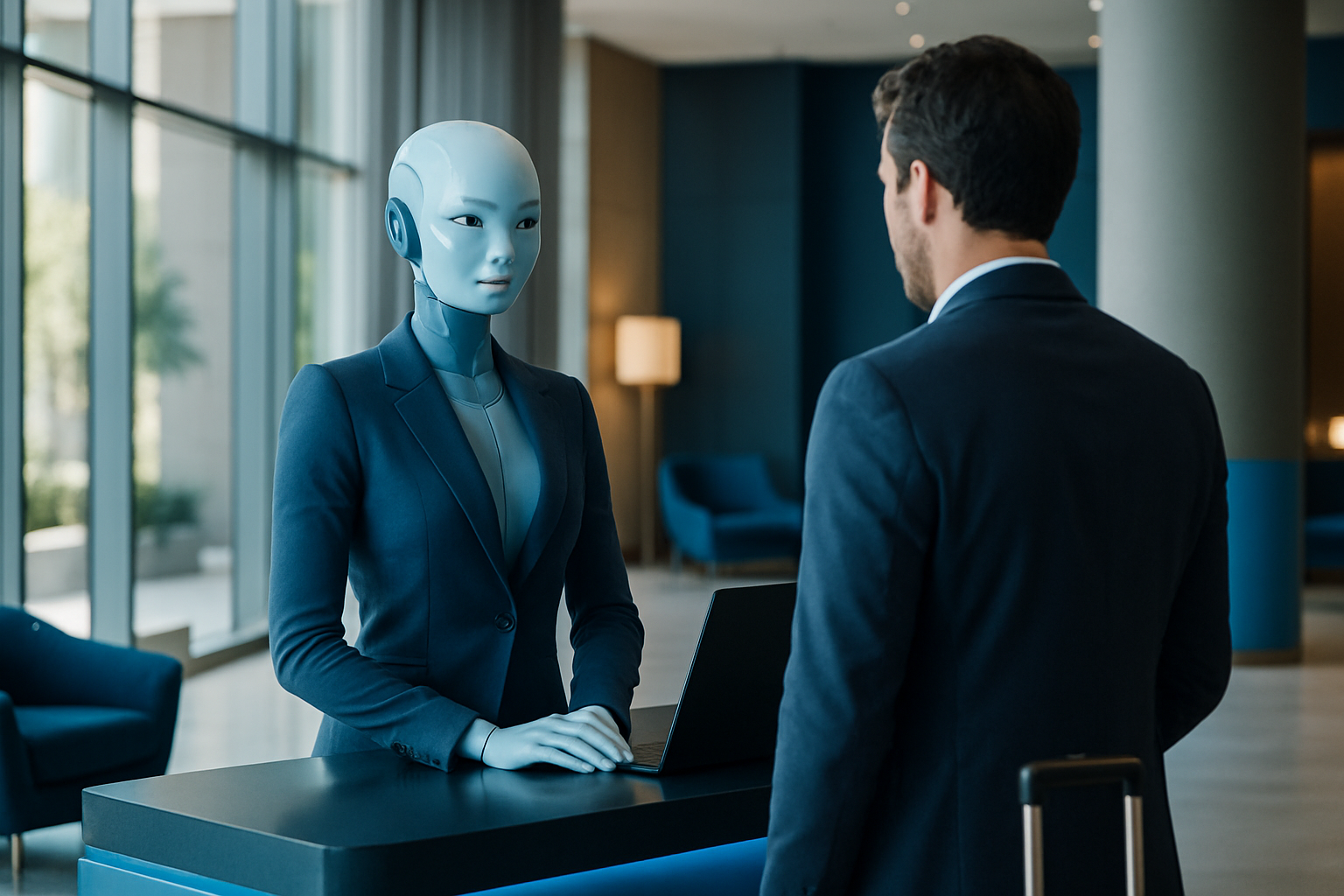
In the evolving landscape of guest services, AI technology is playing a pivotal role. Businesses are increasingly exploring the use of AI employees, specifically hologram avatars, to enhance customer interactions. Unlike traditional robots, hologram avatars offer a unique blend of digital sophistication and human-like engagement, transforming the way businesses interact with their guests.
The shift from physical robots to hologram avatars in AI customer service brings several noteworthy changes. Hologram avatars, like those offered by AssistFlow, provide a more interactive and secure way to engage with guests, especially in high-security venues. This article delves into the differences between these two AI solutions and how they impact guest service.
Enhanced Interaction with Hologram Avatars
Hologram avatars offer a more immersive and engaging experience compared to traditional robots. These digital representations can be designed to look and behave like real humans, providing a more relatable and intuitive interaction. This can significantly enhance the guest experience, as customers feel they are interacting with a human-like entity rather than a mechanical device.
Moreover, hologram avatars can be programmed to exhibit a wide range of emotions and responses, making them adaptable to various customer needs and scenarios. This adaptability is crucial in providing personalized customer care, as it allows the AI employee to respond appropriately to the emotional cues of the guests.
Security and Privacy Considerations
Security is a paramount concern in many service environments, and hologram avatars offer distinct advantages over robots in this regard. Unlike physical robots, which can be tampered with or hacked, hologram avatars are digital and less susceptible to physical interference. This makes them particularly suitable for high-security venues where maintaining the integrity of the service environment is critical.
Additionally, hologram avatars do not require physical maintenance or pose risks associated with mechanical failures, further enhancing their security profile. This digital solution aligns well with environments that prioritize both security and seamless service delivery.
Operational Efficiency and Flexibility
Hologram avatars contribute to operational efficiency by reducing the need for physical infrastructure and maintenance associated with robots. They can be easily updated and scaled to meet changing business needs without the logistical challenges of deploying additional hardware.
The flexibility of hologram avatars also extends to their deployment across various service channels. With AssistFlow's omnichannel capabilities, these avatars can seamlessly interact with guests via website chat, social media platforms, and even phone systems, ensuring consistent and efficient customer service across all touchpoints.
Cost Implications
While the initial investment in hologram technology might be higher, the long-term cost benefits are substantial. Hologram avatars eliminate the need for physical repairs and replacements, and their digital nature allows for quick updates and enhancements without additional costs.
Moreover, the ability to deploy hologram avatars across multiple channels without incurring additional hardware costs makes them a cost-effective solution for businesses looking to enhance their customer service capabilities.
Where AssistFlow Fits
AssistFlow offers a comprehensive AI customer service platform that integrates hologram avatars into its suite of solutions. With capabilities spanning website chat, social media, and phone systems, AssistFlow provides a seamless and efficient customer engagement experience. The platform's support for 150+ languages and 8 channels ensures businesses can cater to a diverse customer base.
For more information on how AssistFlow can enhance your guest service with hologram avatars, visit the AssistFlow website.
Implementation Steps for Integrating Hologram Avatars
Integrating hologram avatars into a business's guest service operations involves a series of strategic steps to ensure a smooth transition and effective deployment. First, businesses should conduct a comprehensive needs assessment to determine the specific areas where hologram avatars can add the most value. This involves identifying the touchpoints where customer interaction is most frequent and where a human-like presence could enhance the experience.
Following the assessment, the next step is to select a hologram avatar provider that aligns with the business's operational goals. Providers like AssistFlow offer platforms that integrate seamlessly with existing systems, making it crucial to evaluate their compatibility with current infrastructure. Once a provider is chosen, businesses should focus on customizing the avatars to reflect their brand identity, including appearance, voice, and behavior. This customization ensures that the avatars resonate with customers and provide a consistent brand experience.
Training and testing are critical components of the implementation process. Businesses must ensure that the avatars are programmed to handle a wide range of customer inquiries and scenarios. Pilot testing in a controlled environment can help fine-tune the avatars' responses and interactions. Finally, businesses should establish a feedback loop to continually assess performance and make necessary adjustments, ensuring that the hologram avatars remain effective and relevant in their roles.
Common Mistakes to Avoid When Deploying Hologram Avatars
When deploying hologram avatars, businesses may encounter several pitfalls that can hinder the effectiveness of this technology. One common mistake is underestimating the importance of personalization. Hologram avatars should be designed to reflect the company's brand and cater to the specific preferences of their customer base. Failing to personalize these avatars can lead to a disconnect between the customer and the brand, reducing the overall effectiveness of the interaction.
Another potential misstep is neglecting to adequately train the avatars. While hologram avatars come with advanced capabilities, they require thorough programming to handle complex customer interactions. Insufficient training can lead to awkward or inaccurate responses, diminishing customer satisfaction. Furthermore, businesses should avoid overlooking the importance of ongoing updates and maintenance. As customer needs and technologies evolve, so too should the capabilities of the hologram avatars. Regular updates ensure that the avatars remain current and effective in their roles.
Lastly, businesses should be cautious about over-relying on hologram avatars for all customer interactions. While they offer significant advantages, there are situations where human intervention is necessary, particularly for complex or sensitive issues. Balancing the use of hologram avatars with human support is crucial for maintaining a high level of customer service and satisfaction.
FAQ
What are the main advantages of hologram avatars over robots?
Hologram avatars offer enhanced interaction, greater security, and operational efficiency. They provide a human-like engagement without the physical limitations and security risks associated with robots.
Can hologram avatars be used in all service environments?
Yes, hologram avatars are versatile and can be deployed across various service environments, from retail to high-security venues, offering consistent and engaging customer interactions.
How does AssistFlow support hologram avatar integration?
AssistFlow integrates hologram avatars into its omnichannel AI platform, enabling seamless interactions across website chat, social media, and phone systems, enhancing overall customer service.
Are hologram avatars cost-effective?
While the initial investment may be higher, hologram avatars offer long-term cost savings by eliminating physical maintenance and enabling quick updates across multiple service channels.
How do hologram avatars enhance customer engagement?
Hologram avatars provide a more relatable and emotional customer interaction, adapting to various customer needs and scenarios, thereby enhancing the overall guest experience.
In conclusion, the transition to hologram avatars in guest services represents a significant step forward in AI customer care. By offering enhanced interaction, security, and operational efficiency, hologram avatars are poised to become a cornerstone of modern customer service strategies. To explore how your business can benefit from this technology, consider booking a demo with AssistFlow today.